
Article: Leather Quality Explained: Why “Genuine Leather” Is Not a Seal of Quality
Leather Quality Explained: Why “Genuine Leather” Is Not a Seal of Quality
“Genuine leather” sounds like quality. Translated literally, it only means: this product is made of real leather. Nothing more. Whether it is the finest layer of the hide or the simplest one, the term will not tell you. If you want to judge leather quality, you need to know how leather is made and which layer of the hide was used. That is exactly what we look at here, using official definitions from standards and regulations rather than marketing vocabulary.
At a glance
· “Genuine leather” and “real leather” only confirm that actual leather was used. Neither term says anything about quality.
· Cowhides are 5 to 10 mm thick and are split horizontally at the tannery. The upper layer (grain split) is dense and tear-resistant, the lower layer (flesh split) is loose and less stable.
· Full grain leather is the highest quality grade: the natural grain remains fully intact, nothing is sanded off.
· In the EU, the standard EN 15987 defines the key terms of the leather trade; in the USA, the FTC Leather Guides apply.
· The more natural the leather surface, the more moisture and care it needs.
What “genuine leather” really means
In the USA, the FTC Leather Guides (16 CFR Part 24) prohibit products from being falsely labelled as leather. A quality grade called “genuine leather” does not exist in these guides. The term only says: the material is real leather, not plastic.
In practice, “genuine leather” has nevertheless become a label for simpler qualities, often corrected leather or coated split leather. The logic is simple: whoever works with full grain leather says so on the label. Whoever only prints “genuine leather” usually has no better term available.
European labelling works in a similar way. The standard EN 15987 defines what may be sold as leather, and split leather must be declared as such. A seal of quality, however, is neither “genuine leather” nor “real leather”. Both are statements of authenticity, nothing more.
Leather is split: this is where quality is decided
A cowhide is 5 to 10 mm thick, far too thick for a handbag. At the tannery it is therefore cut horizontally into layers. This process is called splitting.
On top lies the grain split with the natural skin surface and its fine pores. The fibres here are densely interwoven, which makes this layer tear-resistant, supple and long-lasting. Below lies the flesh split, the layer towards the flesh side. Its fibres are loose, the material is rough on both sides and considerably less stable.
Put simply: the higher up in the hide, the better the leather. That is why the well-known quality pyramid shows full grain leather at the top and bonded leather at the very bottom.

The quality grades at a glance
|
Quality grade |
Layer of the hide |
How to recognise it |
|
Full grain leather |
Top layer, grain fully intact |
Irregular pores, develops a patina |
|
Top grain leather |
Top layer, lightly sanded |
Even surface, fine grain |
|
Corrected / pigmented leather |
Grain side sanded, opaque colour coat |
Very uniform look, often embossed grain |
|
Split leather |
Lower layer (flesh split) |
Rough on both sides, often coated or as suede |
|
Bonded leather |
Shredded leather scraps with binding agents |
May not be sold as leather in the EU without disclosure |
Full grain leather
The top layer with the grain fully intact. Nothing is sanded off, every pore remains visible. Full grain leather ages beautifully and develops a patina over the years. The best-known example on designer bags is the untreated Vachetta leather used by Louis Vuitton.
Top grain leather
Here too the top layer is used, but the surface is lightly sanded. Small scars, insect bites and other marks disappear and the look becomes more even. The term is not standardised, every manufacturer interprets it slightly differently. Top grain is upper-range quality, just no longer completely natural.
Corrected and pigmented leather
If the grain side is sanded more heavily and covered with an opaque colour coat, we speak of corrected or pigmented leather. The surface becomes more robust and less sensitive to stains. Many everyday bags rely on exactly that, and it is perfectly legitimate. The price: the natural grain disappears under the coating. An artificial grain is often embossed instead.
Split leather
Split leather is the lower layer of the hide, the flesh split. Both sides are rough, the fibres loose. Suede is often made from it. Frequently, however, split leather is coated and embossed with a grain pattern to make it look like smooth leather. It never reaches the tear resistance of grain leather.
Under EN 15987, split leather must always be declared as such. In practice, coated split leather is often labelled simply “genuine leather”, and that is precisely the gap many suppliers exploit.
Bonded leather
Shredded leather scraps, pressed into sheets with binding agents. In the EU this material may not be sold as leather, and in the USA the FTC requires a disclosure of the percentage of leather fibres it contains. For a bag that is meant to last, bonded leather is not a good choice.

How to recognise high-quality leather on a bag
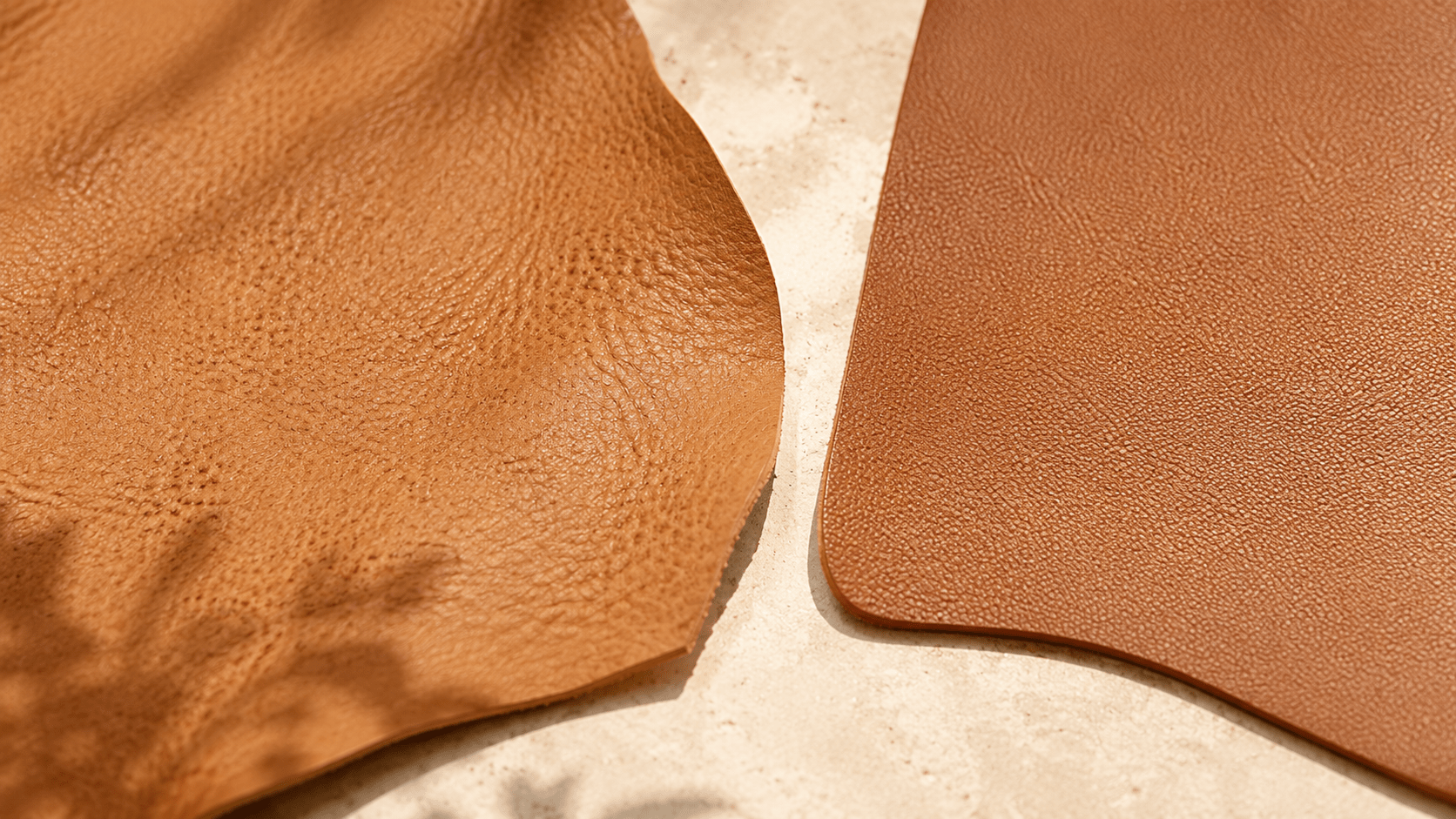
Look at the pores first. Natural grain is slightly irregular, like real skin. A perfectly even, repeating structure points to embossing or coating.
Then the cut edges: grown grain leather shows fine, densely interwoven fibres in cross-section. Visible layers or a spongy, loose edge suggest coated split leather.
And read the label closely. Specific terms such as “full grain leather” or “vegetable-tanned calfskin” are a good sign. If it only says “genuine leather”, all you know is that it is leather. Which layer was used remains open. Reputable manufacturers will gladly answer that question.
What this means for your designer bag
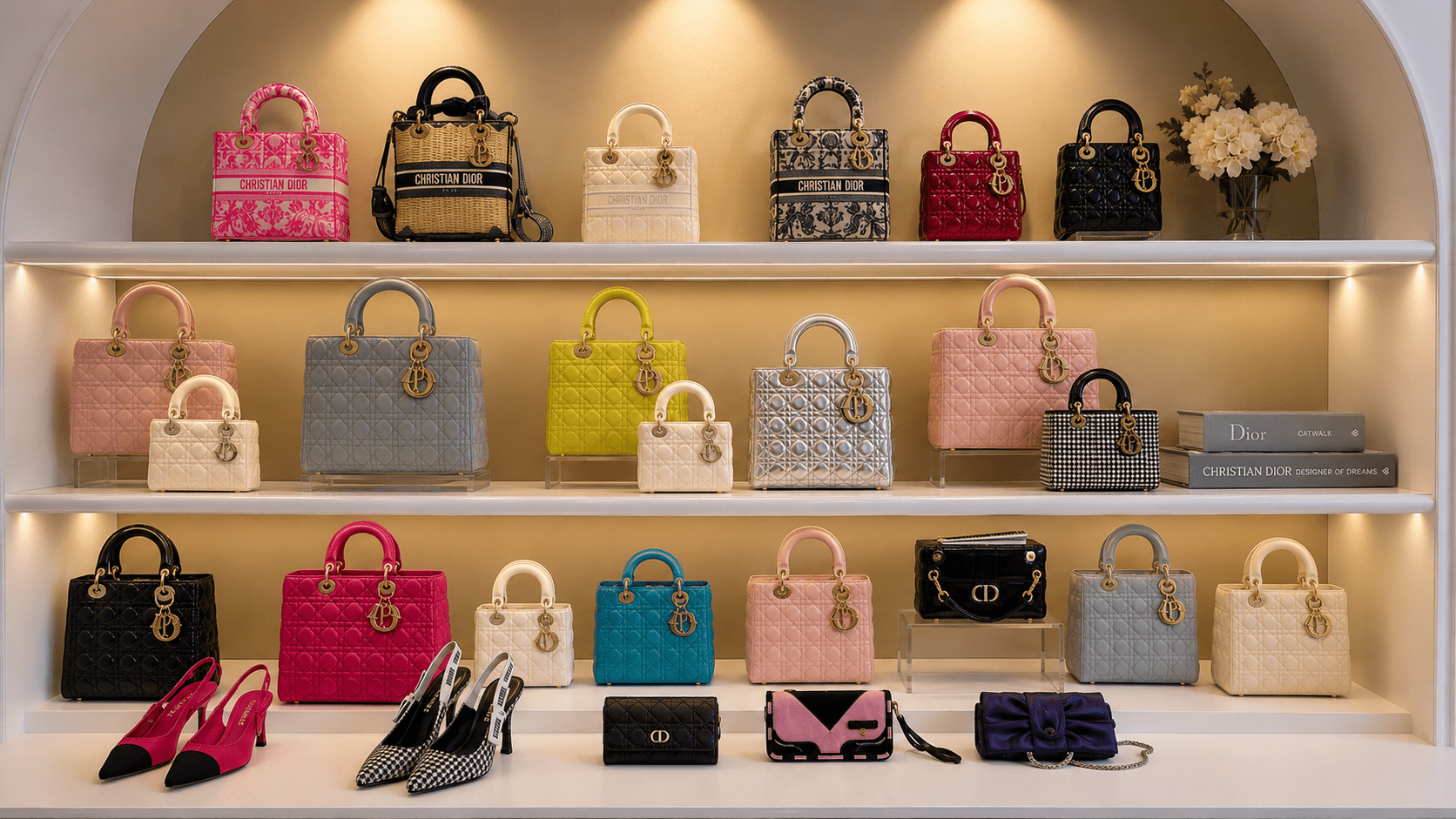
Luxury houses rarely print “genuine leather” on their bags. They name their leathers precisely: Louis Vuitton its Vachetta leather, Chanel lambskin and caviar leather, Hermès Togo or Clémence [internal links: Vachetta article, Chanel article]. The name tells you the animal, the grain and often the finish, and the right care depends on exactly that.
Hermès shows how consistently leather quality is lived in the luxury segment: the house works exclusively with strictly selected full grain leather and even runs its own tanneries. Only hides with a dense fibre structure and even grain are accepted at all. You can read about the nine leather types this produces, and how to care for a Birkin or Kelly, in our Hermès leather guide.
Why this matters to us at GLOWBAG
GLOWBAG grew out of exactly this fascination with leather. Once you understand that leather is tanned skin, you automatically think of care as skincare: the GLOW CLEANER cleans gently without sealing the pores. The GLOW CONDITIONER then supplies the leather with moisture, like a cream after a serum.
That is why the formula is water-based and free of wax and alcohol. Wax seals the pores and settles into the seams, alcohol dries the leather out. Neither goes well with what makes high-quality leather special: a grown, breathing fibre structure. This applies to natural full grain leather just as much as to pigmented leather.
And if you are not sure which leather type your bag has: send us a photo. We will take a look and tell you which care routine fits.
Frequently asked questions about leather quality
Is genuine leather real leather?
Yes. “Genuine leather” means the product is made of real leather. But it is not a mark of quality: the term does not say which layer of the hide was used. In practice it often hides corrected leather or coated split leather.
Which is better: full grain or top grain?
Full grain is considered the highest grade because the natural grain remains fully intact. Top grain is lightly sanded and therefore more even, but less natural. Both come from the top, densest layer of the hide.
Is split leather bad leather?
Split leather is real leather, but from the lower, looser layer of the hide. It is less tear-resistant than grain leather and is often coated to look like smooth leather. Under EN 15987 it must be labelled as split leather.
What does “real leather” on a label mean?
Only that the material is made of tanned animal hide. It is a statement of authenticity, not a quality grade. Coated split leather can carry the same label.
Which leather is easiest to care for?
Pigmented leather with an opaque colour coat is the least sensitive to stains and moisture. Natural leathers such as aniline or Vachetta are more delicate and need regular, gentle care. Both can dry out, so moisture care belongs in every leather routine.
Sources
· EN 15987 Leather – Terminology – Key definitions for the leather trade (European standard)
· Federal Trade Commission (USA): Guides for Select Leather and Imitation Leather Products, 16 CFR Part 24 – ecfr.gov/current/title-16/chapter-I/subchapter-B/part-24
· Verband der Deutschen Lederindustrie (VDL): Designation regulations for leather – vdl-web.de/en/leather/designation-regulations/
· LCK leather lexicon: split leather (splitting process, grain split/flesh split) – moebelpflegeshop.de/lederlexikon/lederarten/spaltleder/

Written by Janine Fichna